
B2B Tech Asia 2026 Recap: Indonesia's First B2B Software Expo and What It Signals for 2027
B2B Tech Asia 2026 brought a clear signal to Jakarta: demand for business software is no longer a niche conversation in Indonesia.
Held on 1–2 July 2026 at Kuningan City Grand Ballroom, AXA Tower, Jakarta, the event was Indonesia’s first expo dedicated to B2B software. Organised by VRIGroup and DailySocial, it gathered technology providers, enterprise buyers, investors, executives, and functional leaders around the theme “The Dawn of Asia’s B2B Tech Mega Market.”
The event’s numbers point to a market that is becoming broader, more structured, and more practical. B2B Tech Asia 2026 recorded 3,033 registrants, with 1,534 validated regular check-ins and 145 validated VIP check-ins across the two-day programme. It featured 65 exhibitor and sponsor brands, 10 department-based zones, 1,264 matchmaking interests, and more than 25 speakers.
For the B2B software market Indonesia is building, the event offered a useful snapshot of demand across industries, departments, and buyer priorities.

What B2B Tech Asia 2026 was
B2B Tech Asia 2026 was designed as a focused meeting point for B2B software providers and business decision-makers. Unlike broader technology events, its scope was specific: software and services built for business operations, revenue teams, customer engagement, finance, and organisational growth.
The event brought together exhibitors and sponsors including SoftBank, AWS, Salesforce, Zoho, 8x8, OCBC, SMBC, Odoo, and Mekari. Their presence gave the expo a wide base across cloud, software, communications, finance, business applications, and local technology capability.
The format also reflected how enterprise technology buying is changing. Rather than create one general exhibition floor, the event used 10 department-based zones. This made the structure more aligned with how companies evaluate software in practice. Departmental needs differ, and clear zones helped put those needs at the centre of the experience.
The theme, “The Dawn of Asia’s B2B Tech Mega Market,” matched the direction of the event. The focus was not only on technology supply. It was also on the expanding role of business software across Indonesia and the region.
The numbers behind the event
B2B Tech Asia 2026 drew 3,033 registrants. From that total, the event recorded 1,534 validated regular check-ins and 145 validated VIP check-ins.
The exhibition and sponsor base reached 65 brands, creating a concentrated view of the vendors and institutions engaging with Indonesia’s B2B software opportunity.
The event also recorded 1,264 matchmaking interests, a notable figure because it shows active intent rather than passive attendance. For a B2B Expo focused on software, this matters. Senior buyers and operators often attend with specific problems in mind. Matchmaking interest gives a clearer view of purposeful engagement.
The speaker programme included more than 25 speakers, with event highlights spanning panel sessions, product demos, business matchmaking, and executive networking.
Metric | B2B Tech Asia 2026 figure |
Registrants | 3,033 |
Validated regular check-ins | 1,534 |
Validated VIP check-ins | 145 |
Exhibitor and sponsor brands | 65 |
Department-based zones | 10 |
Matchmaking interests | 1,264 |
Speakers | More than 25 |
These figures show an event with both breadth and focus. The number of registrants reflects market interest. The validated check-ins show in-person participation. The matchmaking interests point to more specific commercial intent.
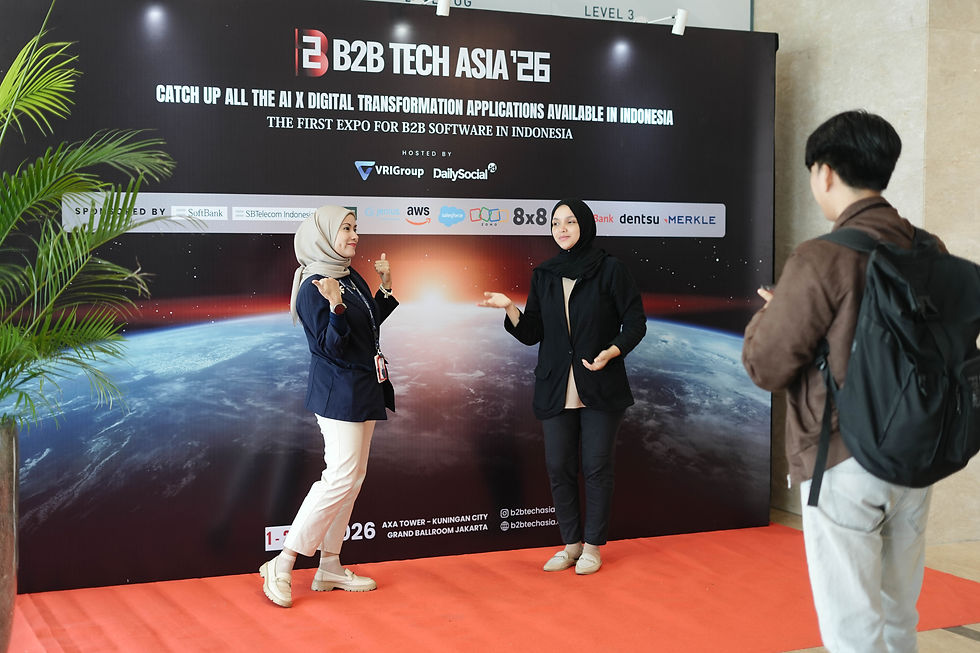
Who attended B2B Tech Asia 2026
The visitor mix showed demand from several major business sectors. The top visitor industries were IT, Finance, Manufacturing, and Telecom.
Top visitor industries | Visitors |
IT | 937 |
Finance | 344 |
Manufacturing | 238 |
Telecom | 201 |
The dominance of IT was expected for a software-focused event, but the spread across finance, manufacturing, and telecom is important. It shows that B2B software demand has moved beyond technology teams alone.
The top departments also showed a practical buyer mix.
Top visitor departments | Visitors |
Sales/BD | 852 |
Executive Management | 699 |
Marketing/Comms | 404 |
Sales/BD led the departmental count, followed by Executive Management and Marketing/Comms. This mix suggests that B2B software decisions are increasingly tied to revenue, leadership priorities, and customer-facing operations.
The presence of executive management is especially relevant. Business software decisions are no longer only functional or technical. They often require leadership involvement because they affect cost, growth, process design, and organisational change.
The strong showing from Sales/BD and Marketing/Comms also points to demand for tools that support market expansion, customer relationships, and commercial execution. The event’s department-based zones matched this reality by organising the experience around business functions.
Event highlights across sessions, demos, matchmaking, and networking
B2B Tech Asia 2026 combined four main formats: panel sessions, product demos, business matchmaking, and executive networking. Each played a different role in the event’s overall value.
Panel sessions framed the market conversation
The panel sessions gave participants a structured way to discuss the direction of B2B technology adoption. With more than 25 speakers participating across the event, the programme supported a wider conversation around software demand and Asia’s developing B2B technology market.
The value of these sessions was in context. B2B software buyers are not only choosing tools. They are also trying to understand timing, market readiness, and the types of solutions that fit their organisations.
A focused speaker programme helped place individual software categories within a broader regional discussion.
Product demos made the market tangible
Product demos helped turn market themes into practical evaluation. For software providers, demos remain one of the clearest ways to show product fit. For buyers, they offer a direct look at how a platform works and how it might support a department or business need.
With exhibitors including SoftBank, AWS, Salesforce, Zoho, 8x8, OCBC, SMBC, Odoo, and Mekari, the event floor represented a range of offerings relevant to business operations and software adoption.
The demos also helped connect attendees with the department-based structure of the event. When software is organised around functional needs, comparisons become clearer and more useful.

Business matchmaking showed intent
The event recorded 1,264 matchmaking interests, making matchmaking one of the clearest signals from B2B Tech Asia 2026.
For software events, total footfall matters, but commercial relevance matters more. Matchmaking interest shows that participants were not only browsing. They were identifying possible conversations, partners, vendors, or opportunities that matched specific priorities.
This is especially important in B2B technology, where buying cycles can involve multiple departments and decision layers. A strong matchmaking layer helps reduce noise and create more meaningful connections.
Executive networking supported higher-level conversations
Executive networking gave senior participants space for business-level engagement. For B2B software, that matters because decisions often require alignment between strategy, budget, operations, and implementation.
The event’s 145 validated VIP check-ins also point to the importance of senior attendance. While a large visitor base builds visibility, senior engagement helps indicate whether the market is ready to move from interest to evaluation.
Three takeaways from B2B Tech Asia 2026
B2B Tech Asia 2026 was not only a first edition event. It also helped clarify how Indonesia’s B2B software market is developing.
B2B software demand is becoming mainstream
The attendee profile showed interest from multiple industries and departments. IT led the industry mix with 937 visitors, but finance, manufacturing, and telecom also appeared among the top sectors.
This matters because B2B software demand becomes mainstream when it is no longer limited to technical teams. When executive management, sales, business development, marketing, and communications teams engage directly, software becomes part of business planning.
The departmental numbers support this shift. Sales/BD accounted for 852 visitors, Executive Management for 699, and Marketing/Comms for 404. These are not only technical functions. They are functions tied to growth, customer engagement, and management priorities.
For Indonesia, that is a meaningful sign. The software conversation is moving closer to business outcomes.
Quality of matching matters more than crowd size
The event’s 3,033 registrants gave it a strong top-of-funnel base. The validated check-in figures gave a clearer view of physical participation. Yet the 1,264 matchmaking interests may be one of the most useful signals for the market.
In B2B software, a crowded venue does not automatically create business value. Relevant connections matter more. The right buyer meeting the right provider at the right time can be more useful than a large but unfocused audience.
B2B Tech Asia 2026 put matchmaking alongside exhibition, sessions, demos, and networking. That structure reflects a practical truth: software buyers often arrive with specific needs, and providers need qualified conversations.
A more mature event model should measure intent, not only attendance.
Indonesia is a strategic expansion market
The event’s launch in Jakarta was significant. Indonesia’s first expo dedicated to B2B software brought together global, regional, and local names in one focused setting.
The exhibitor and sponsor list included SoftBank, AWS, Salesforce, Zoho, 8x8, OCBC, SMBC, Odoo, and Mekari. Their participation points to the strategic relevance of Indonesia for B2B technology growth.
The industry mix also supports this view. IT, finance, manufacturing, and telecom all appeared among the top visitor sectors. These are important areas for enterprise software adoption, and their presence helped make the event more than a technology showcase.
For companies looking at Southeast Asia, Indonesia continues to command attention because of its business scale and role in regional expansion plans. B2B Tech Asia 2026 showed that the market conversation is becoming more focused, more organised, and more department-specific.

What this signals for 2027
B2B Tech Asia 2026 gave Indonesia’s B2B software sector a dedicated platform and a clear set of market signals.
The event showed that demand is broadening across industries. It showed that business functions beyond IT are active in the software conversation. It also showed that matchmaking and executive engagement are central to the next stage of B2B technology events.
The next edition has already been announced. B2B Tech Asia 2027 will take place on 13–14 July 2027 at JICC Jakarta.
For the regional B2B technology market, the 2026 edition set a clear marker. Indonesia now has a dedicated software expo, and the 2027 event will arrive with a stronger base of market awareness, buyer interest, and regional attention.
.png)
Comments